Delving into tile siding exterior, this introduction immerses readers in a unique and compelling narrative. From the concept of tile siding to the various styles available, this overview sets the stage for an informative journey into the world of exterior design.
As we dive deeper into the installation process, maintenance tips, and durability aspects, readers will gain a deeper understanding of the benefits and considerations of using tile siding for exteriors.
Overview of Tile Siding Exterior
Tile siding for exterior walls is a popular choice due to its durability, aesthetic appeal, and low maintenance requirements. This type of siding involves using tiles made from various materials to cover the exterior walls of a building, providing both protection and visual interest.
Benefits of Tile Siding
- Durability:Tile siding is known for its longevity and ability to withstand harsh weather conditions.
- Low Maintenance:Once installed, tile siding requires minimal upkeep, saving time and money in the long run.
- Aesthetic Appeal:With a wide range of materials and designs available, tile siding can enhance the overall look of a building.
Popular Tile Materials
- Ceramic:Traditional and versatile, ceramic tiles offer a classic look that can suit various architectural styles.
- Natural Stone:Elegant and timeless, natural stone tiles add a luxurious touch to the exterior of a building.
- Porcelain:Durable and resistant to stains, porcelain tiles are a practical choice for high-traffic areas.
Styles and Designs
- Mosaic:Small tiles arranged in intricate patterns, creating a unique and eye-catching exterior.
- Scallop:Curved tiles that overlap, providing a charming and rustic appearance to the facade.
- Wood Look:Tiles that mimic the look of wood siding, offering a modern twist with added durability.
Installation Process
When it comes to installing tile siding on exterior walls, following a step-by-step process is essential to ensure a successful outcome. Proper preparation of the surface, the right tools and materials, and attention to sealing and waterproofing are key factors to consider.
Step-by-Step Installation Process
- Clean the exterior wall surface thoroughly to remove any dirt, debris, or loose paint.
- Inspect the wall for any damage or rot that needs to be repaired before installation.
- Apply a weather-resistant barrier or moisture barrier to the wall to protect against water infiltration.
- Install flashing around windows, doors, and other openings to prevent water intrusion.
- Begin installing the tile siding from the bottom up, overlapping each row to prevent water from seeping behind the tiles.
- Use a level to ensure the tiles are straight and evenly spaced.
- Secure the tiles in place with the appropriate fasteners, following the manufacturer's guidelines.
- Finish the installation by sealing the joints between tiles with caulk or sealant to prevent water penetration.
Tools and Materials Required
- Tile siding
- Weather-resistant barrier
- Flashing
- Fasteners
- Caulk or sealant
- Level
- Hammer or nail gun
- Tape measure
- Safety goggles and gloves
Preparing the Exterior Surface
Before installing tile siding, it is crucial to prepare the exterior surface properly. This involves cleaning the wall, repairing any damage, and applying a weather-resistant barrier to protect against moisture. Ensuring a smooth and stable surface will help the tiles adhere properly and prevent water damage over time.
Importance of Sealing and Waterproofing
Proper sealing and waterproofing during the installation process are vital to the longevity and durability of tile siding. Sealing the joints between tiles and ensuring that flashing and barriers are correctly installed will help prevent water infiltration and protect the structure of the building from damage.
Investing time and effort into proper sealing and waterproofing will pay off in the long run by maintaining the integrity of the exterior walls.
Maintenance and Care
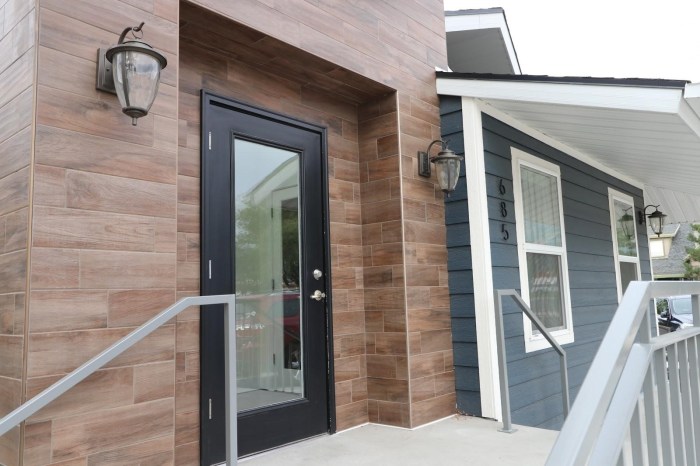
Proper maintenance is essential to ensure the longevity and appearance of tile siding exteriors. By following a regular care routine, you can keep your tile siding looking its best for years to come.
Cleaning Methods
- Regularly rinse the tile siding with a garden hose to remove dirt and debris.
- Use a mild detergent and soft brush to scrub any stubborn stains gently.
- Avoid using abrasive cleaners or tools that could damage the tiles.
- Consider pressure washing the siding once a year for a deeper clean.
Preventing Damage
- Trim overhanging tree branches to prevent scratches and damage to the tiles.
- Inspect the siding regularly for any cracks or loose tiles and address them promptly.
- Avoid hitting the tiles with heavy objects or tools during outdoor activities.
- Apply a sealant to the tiles every few years to protect them from moisture and UV damage.
Addressing Common Issues
- For cracks in the tiles, carefully remove the damaged tile and replace it with a new one using adhesive.
- If tiles become loose, secure them back in place with suitable fasteners or adhesive.
- Consult a professional if you notice significant damage or issues beyond your DIY capabilities.
Durability and Weather Resistance

Tile siding is known for its exceptional durability and weather resistance, making it a popular choice for exterior cladding. When exposed to different weather conditions, tile siding holds up remarkably well, maintaining its integrity and aesthetic appeal.
Durability Against Various Elements
Tile siding is highly resistant to moisture, making it an ideal choice for regions prone to heavy rain or snow. The non-porous nature of tile helps prevent water infiltration, reducing the risk of mold, mildew, and rot. Additionally, tile siding is resistant to UV exposure, ensuring that it retains its color and finish over time.
Comparison with Other Siding Options
Compared to other exterior siding options such as wood or vinyl, tile siding excels in terms of longevity and resilience. While wood siding may rot or warp over time, and vinyl siding may fade or crack with prolonged exposure to the elements, tile siding remains structurally sound and visually appealing.
Suitability in Different Climates
Tile siding is particularly suitable for regions with diverse climates, ranging from hot and humid to cold and snowy. Its ability to withstand extreme temperature fluctuations, moisture, and sunlight makes it a versatile choice for homeowners looking for a durable and low-maintenance exterior cladding option.
Final Thoughts
In conclusion, tile siding exterior offers a versatile and durable option for enhancing the aesthetics and longevity of your property. By following the recommended maintenance practices and proper installation techniques, you can enjoy the beauty of tile siding for years to come.
Popular Questions
How do I choose the right tile material for siding?
Consider factors like durability, maintenance requirements, and aesthetic appeal when selecting tile materials for siding.
What tools are needed for installing tile siding?
Common tools include a tile cutter, trowel, mortar, level, and spacers for precise installation.
How often should I clean tile siding?
Regular cleaning every 6-12 months using a mild detergent and water can help maintain the appearance of tile siding.
Can I repair cracked tiles in tile siding?
Yes, cracked tiles can be replaced individually by carefully removing the damaged tile and installing a new one in its place.
Is tile siding suitable for all climates?
While tile siding is generally durable, it may require additional maintenance in extreme climates with harsh weather conditions.